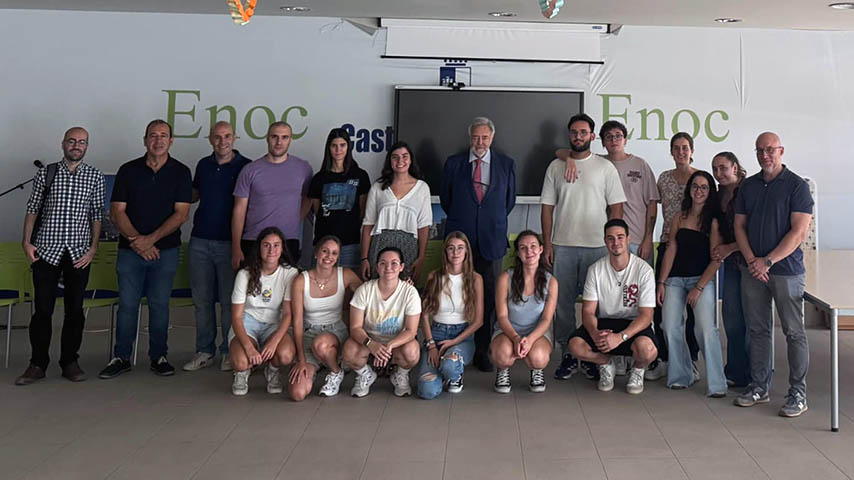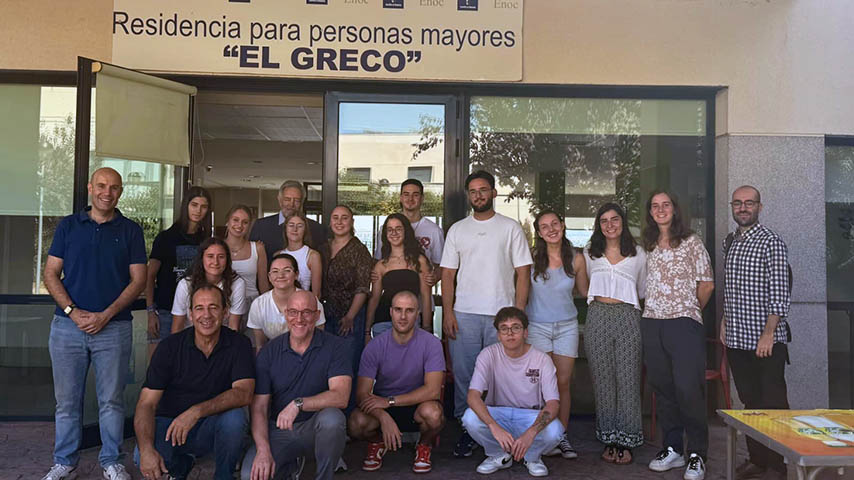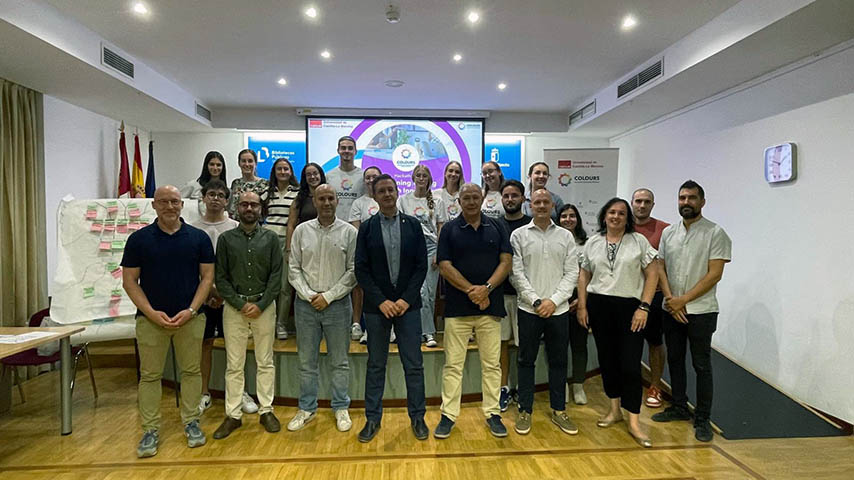

The University of Castilla-La Mancha (UCLM) has organised the first hackathon in Toledo as part of the European Colours alliance, in which fifteen students from the fields of Sports Science, Social Education, Nursing and Physiotherapy have participated with the challenge of offering innovative responses to the problem of population ageing. The Toledo Manifesto, which emerged from the initiative, calls for more housing, highly specialised qualified professionals and public policies based on scientific evidence.
Organised into thematic groups with professional mentoring, the participants worked on maintaining an active lifestyle, the economics of health, barriers in the home, future nursing homes and public policies aimed at healthy ageing.
As complementary activities, they participated in the UMEDULA initiative, promoted by the Military Emergency Unit (UME) to encourage bone marrow donations, and visited the El Greco nursing home, located in Azucaica (Toledo) and run by the Enoc Group; one of the community homes located in Torrijos (Toledo) and run by the Cicerón Association, and the Polígono Senior Citizens’ Centre (Toledo), where the organiser Nazareth Torreglosa showed them the different activities they do with the elderly.
After several days of work, a jury evaluated the proposals submitted by the groups and, based on criteria of quality, feasibility and innovation, awarded a prize of €3,000 to the winning team, an interdisciplinary and international group that presented an app with video calls in the project “Aquí y ahora” (Here and Now), aimed at the progressive introduction of physical activity among older people. Students Elisabetta Pettenuzzo (University of Ferrara), Daniel García, Elisabeth Ruiz, María Sánchez and Inés Lancha have also committed to creating a Student Association for Entrepreneurship with the aim of developing the ideas that emerged from the hackathon, transferring them to society and generating a lasting impact.
At the closing ceremony, attended by the Vice-Chancellor for International Policy and Global Alliances, Raúl Martín, the Toledo Manifesto was made public. Its preliminary conclusions point to the need for a greater and more diverse housing supply that guarantees different levels of privacy and continuity in the life plans of older people.
It also mentions the need to prioritise public policies based on the most effective interventions, backed up by scientific evidence and including a cost-effectiveness analysis, as well as qualified professionals with a high degree of specialisation to make the welfare system sustainable in a society with an ageing population.
CoLab on active and healthy ageing
The hackathon held at the Castilla-La Mancha Library brings to a close the international co-creation laboratory (CoLab) that took place last May at the Toledo University Hospital on active and healthy ageing, under the direction of professors Ignacio Ara and Luis Alegre. Held in a hybrid format, it brought together nearly 200 students, representatives of public administrations, companies and social organisations, who worked alongside scientific staff on this common challenge from a comprehensive perspective.