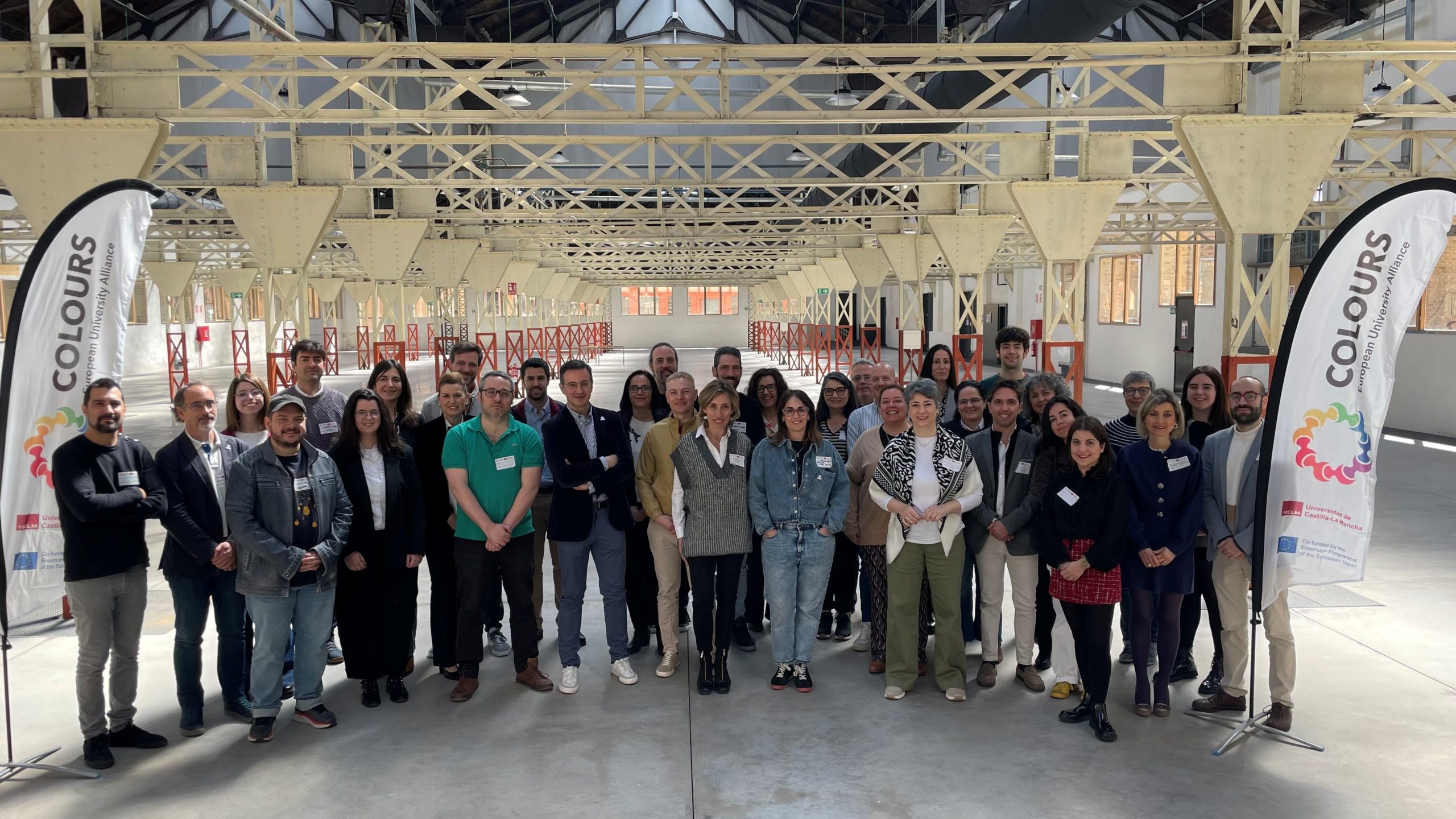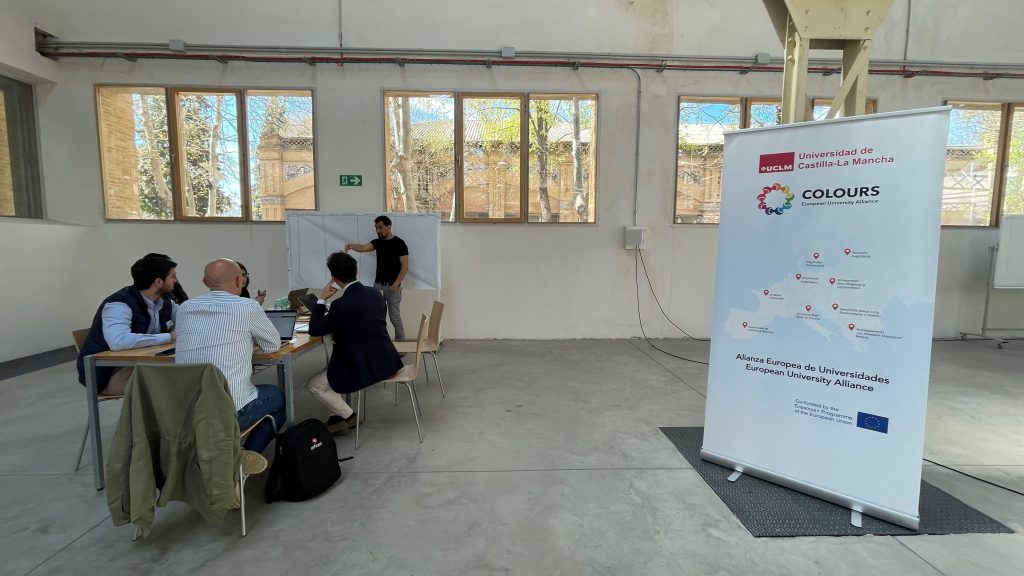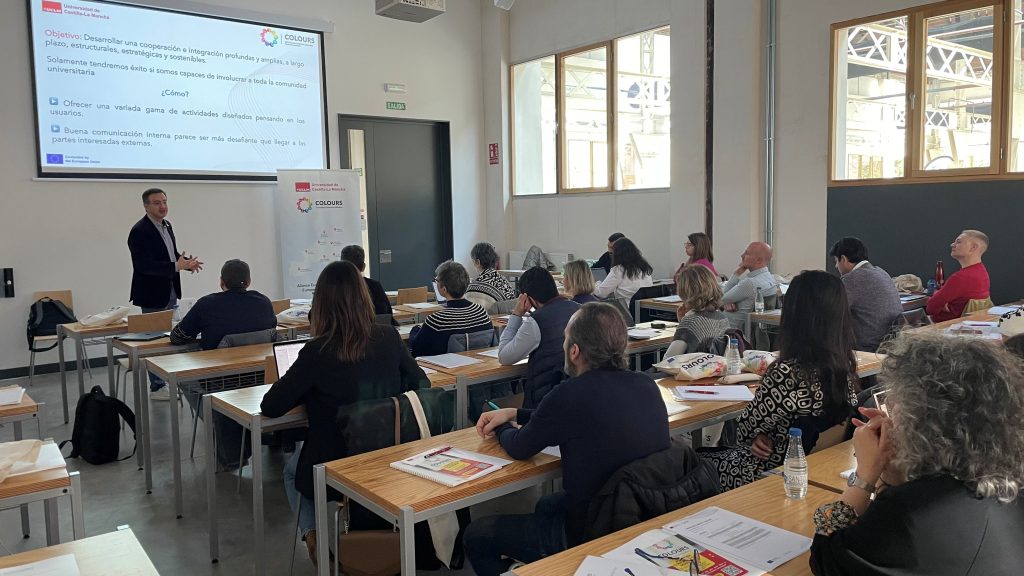
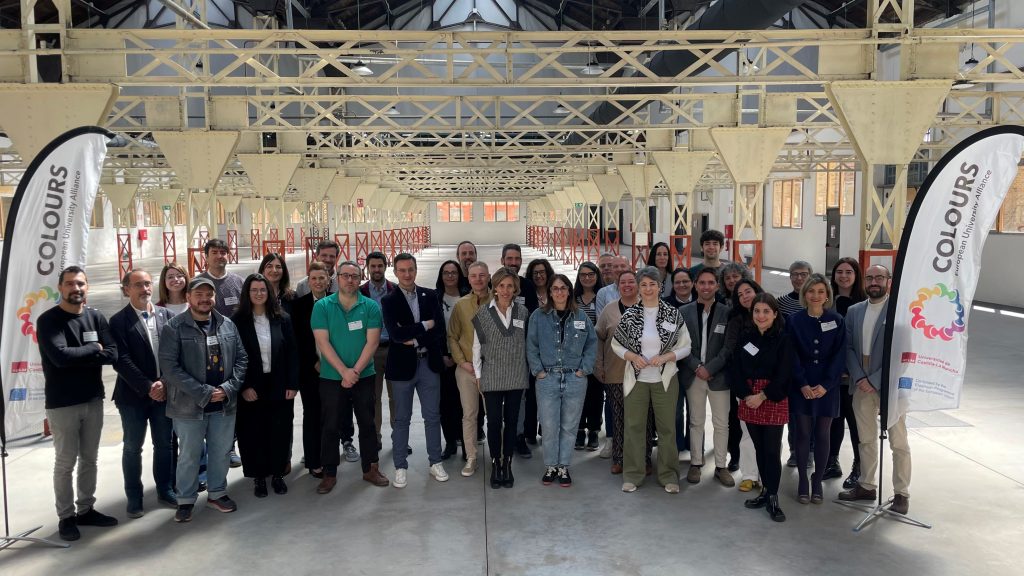
The University of Castilla-La Mancha (UCLM) has gathered at the Toledo Campus teachers, students and professionals from administration, management and services linked to the COLOURS alliance with the aim of identifying opportunities and defining strategies for consolidation. At the opening of the meeting, the vice-rector for International Policy and Global Partnerships, Raúl Martín, stressed that this initiative ‘is a profound transformation that involves the entire university community’.
“Partnerships provide unprecedented exposure to internationalisation. They are a key tool for the implementation of the Bologna Process,” said Martín. His speech underlined that European partnerships work to consolidate a more collaborative and innovative university ecosystem and that ‘regional engagement is a key pillar’. In the case of the UCLM, the associated partners are the Institute for Research in Hunting Resources (IREC-CSIC), the Science and Technology Park of Castilla-La Mancha, the National Hydrogen Centre, the Eurocaja Rural Foundation, Incarlopsa and Telefónica.
According to the vice-chancellor, in the regulatory framework, the alliances are influencing various legislative changes in Spain. The Organic Law 2/2023 of 22 March on the University System (LOSU) and Royal Decree 822/2021 of 28 September on the organisation of university education make explicit reference to these initiatives. ‘In the UCLM, the Regulation on credit recognition and transfer already contemplates participation in alliance activities as part of the students’ training’, he explained.
The meeting held in Toledo has served to identify opportunities and define strategies to consolidate COLOURS as a model of educational and research cooperation, in order to move towards a European inter-university campus based on innovative, sustainable and socially connected higher education. ‘We are here to shape the future of our university community and its impact on the world,’ said the vice-rector.